



How UI/UX Design Impacts SEO and Bounce Rate
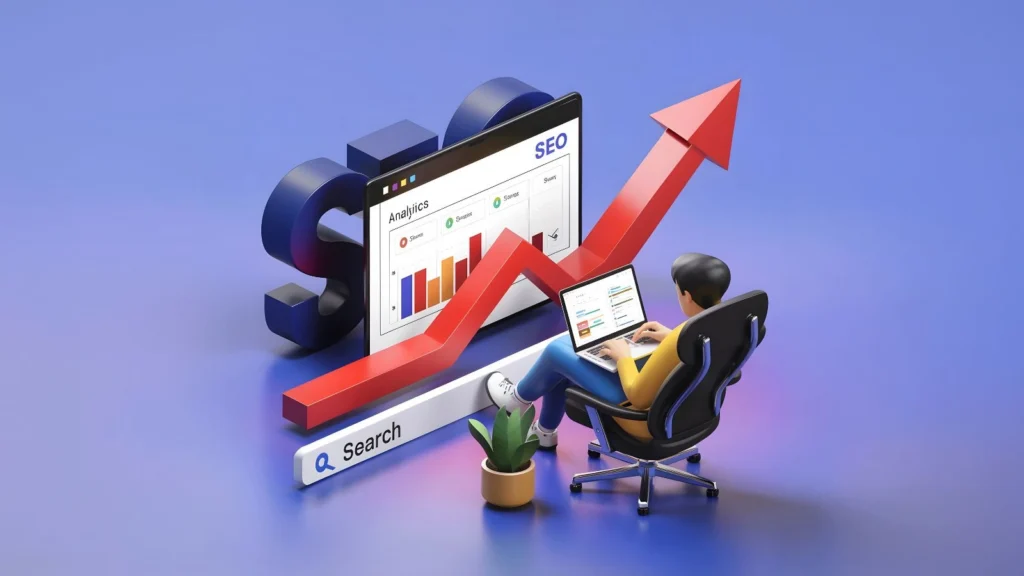
Learn how UI/UX design impact on SEO and bounce rate affects user experience, search rankings, and website engagement.
Most businesses pour resources into climbing search rankings but rarely stop to ask what happens after someone actually lands on their website. The traffic arrives. The visitor looks around for a few seconds. Then they leave. This gap between attracting users and keeping them is where SEO and user experience design either work together or quietly undermine each other.
In 2026, treating these two disciplines as separate workflows is no longer realistic. Search engines have grown significantly better at interpreting user behavior signals, and the quality of experience a website delivers now directly influences how that site performs in organic search.
Understanding the Relationship Between UX and SEO
UX design is the practice of shaping how people interact with a product or digital environment. It covers everything from how quickly a page loads to whether a button is easy to find on a small screen. The goal is to reduce friction and help users accomplish what they came to do.
SEO, at its core, is about making content discoverable and relevant. But search engines do not just evaluate text and links anymore. They increasingly factor in engagement signals, page experience metrics, and the overall quality of what users encounter when they arrive at a site.
Both disciplines ultimately answer the same question: Is this website worth a user’s time? When UX and SEO are aligned, the answer is yes. When they pull in opposite directions, rankings suffer, and visitors leave.
How UI/UX Design Impacts SEO

Understanding UI/UX design impacts on SEO means looking at the specific design decisions that either support or hurt how search engines and users perceive a website.
Website Speed and Performance
Speed is one of the most studied factors in both UX and search performance. Research consistently shows that users begin abandoning pages after just a few seconds of load time, and the drop-off accelerates with each additional second. Search engines use Core Web Vitals, including Largest Contentful Paint and Interaction to Next Paint, as measurable signals of page experience quality.
Slow-loading pages create an immediate trust problem. A visitor who waits too long for content to appear does not usually sit and wait. They hit the back button, which sends a negative signal about page relevance and user satisfaction.
Mobile Responsiveness
Google has operated on a mobile-first indexing framework for several years now, meaning it primarily uses the mobile version of a site to determine rankings. In a market like the UAE, where mobile internet usage consistently outpaces desktop, this is especially important.
Mobile UX is not simply about making a desktop layout smaller. It involves touch-target sizing, vertical content flow, readable font sizes without zooming, and fast performance on mobile networks. When a mobile experience feels awkward or incomplete, users leave quickly, and that behavior is tracked.
Navigation and Site Structure
Clear navigation serves both human visitors and search engine crawlers. When users cannot find what they need within the first few clicks, they abandon the journey. When crawlers encounter confusing or circular link structures, they may miss important pages altogether.
A well-organized site architecture distributes authority across pages, makes content accessible in fewer steps, and creates a logical flow that matches how users think about the subject matter. This is one of the areas where thoughtful UX design directly supports crawlability and indexation.
Content Readability
Typography, whitespace, and layout hierarchy all affect how long someone stays on a page and how much of the content they actually absorb. Dense blocks of small text, low-contrast color combinations, and poor heading structure push readers away quickly.
Scannable content with clear headings, short paragraphs, and visual breathing room performs better in engagement metrics. Users read more, scroll further, and spend longer on pages they can easily navigate visually.
Accessibility
Accessible design means building websites that work for people with visual, motor, cognitive, or hearing differences. Beyond being the right approach, it also carries practical SEO benefits. Proper semantic HTML, descriptive image alt text, and keyboard navigability all contribute to how well a page is understood by search engines.
Inclusive design also broadens the addressable audience, which means more users engaging with content for longer periods of time.
What Is Bounce Rate and Why Does It Matters?
Bounce rate refers to the percentage of visitors who land on a page and leave without taking any further action on the site. They do not click a link, visit another page, or interact with any element. They just leave.
A high bounce rate is not automatically a problem. A contact page or a page with a phone number might see high bounce rates because users found exactly what they needed. Context matters. But when bounce rates are high on pages designed to drive deeper engagement, that signals a disconnect between what users expected and what they found.
Search engines interpret persistent patterns of quick exits as a signal that the page may not be satisfying user intent, which can gradually affect how that page ranks for relevant queries.
Common UX Problems That Increase Bounce Rates

Slow page loads are the most common culprit. Users have very little patience for pages that take more than two to three seconds to become usable.
Cluttered layouts overwhelm visitors with too much information at once. When users cannot quickly identify where to focus, many simply give up.
Confusing navigation forces users to guess where things are. If someone cannot locate the product category or service they want within a click or two, they often leave rather than search further.
Poor mobile experiences continue to account for a disproportionate share of exits, particularly for businesses in the UAE where the majority of web traffic comes from mobile devices.
Intrusive pop-ups that appear immediately or block content damage the user experience significantly. Google has openly flagged intrusive interstitials as a negative page experience signal.
Weak calls-to-action leave users with no clear next step. Even a well-designed page can underperform if the path forward is ambiguous or visually buried.
How Better UX Improves User Engagement
When UX is done well, visitors stay longer. They browse more pages. They start to understand what a business offers and whether it aligns with their needs. These behaviors, known as engagement signals, are increasingly factored into search performance.
Longer session durations indicate that users are finding value. Multiple page views suggest that the site is organized in a way that supports discovery. Lower exit rates on key conversion pages suggest that the design is supporting decision-making rather than interrupting it.
Perhaps most importantly, good UX builds trust. Users who feel confident navigating a site are far more likely to make a purchase, fill out a form, or return in the future.
The Business Impact Beyond SEO
Strong UX design is not just a technical investment. It directly affects revenue. A site that is easy to use converts more of its visitors into customers. A brand that communicates clearly and professionally earns more repeat business. A digital experience that works reliably across devices builds credibility that generic marketing cannot replicate.
Customer retention, brand perception, lead quality, and revenue growth are all downstream outcomes of the experience a website delivers. Businesses that treat UX as a cost center rather than a growth lever tend to learn this lesson through declining conversions rather than proactive investment.
The UAE Digital Market Perspective
The UAE has one of the highest smartphone penetration rates in the world, and digital expectations among consumers here are correspondingly high. Users in Abu Dhabi and across the region interact with global platforms daily and carry those expectations into every brand interaction.
This means businesses operating in the UAE face a more demanding audience than many markets. A slow or poorly structured website does not just hurt rankings. It damages the brand perception of companies competing in a space where digital maturity is assumed.
For businesses looking at UI UX design services in Abu Dhabi, the competitive landscape makes UX a genuine differentiator rather than just a nice-to-have feature.
UX as a Long-Term Competitive Advantage

The businesses gaining sustainable ground in organic search today are not simply the ones with the most links or the most content. They are the ones investing in experiences that users want to stay in. Search algorithms are increasingly reward-oriented around satisfaction, not just relevance.
Companies that have historically separated design teams from SEO teams are finding that integration produces better results. When user experience design services in Abu Dhabi are approached with an understanding of search intent, content structure, and behavioral analytics, the outcomes compound over time.
Partnering with providers who understand both the technical requirements of seo services in Abu Dhabi and the behavioral nuances of good design creates a more durable advantage than either discipline can deliver alone.
Future Outlook
AI-assisted personalization is beginning to reshape how websites adapt to individual users, serving different content and layouts based on behavior patterns and preferences. This makes the baseline experience even more important. Personalization layers cannot rescue a fundamentally poor design.
Search is also evolving toward experience signals more broadly. Behavioral analytics are being used not just to measure how users interact with a site, but to inform continuous design iteration. The most competitive websites in 2026 are the ones where data from real users drives regular improvements.
Performance-driven design, where speed, accessibility, and engagement are treated as primary design requirements rather than afterthoughts, will continue to separate leading digital brands from those still catching up.
Conclusion
Websites that combine strong UX with effective SEO are better positioned to attract, engage, and retain users in an increasingly competitive digital environment. The two disciplines share the same end goal: delivering exactly what a user needs, exactly when they need it, in a format that is easy to use. Businesses that align their design and search strategies around this shared objective tend to see more durable results than those treating each as a separate function.
Disclaimer: The content in this article is for informational purposes only. SEO performance, bounce rates, and conversion outcomes may vary depending on website structure, industry, audience behavior, and implementation quality. Businesses should evaluate UX and SEO strategies based on their specific goals, users, and market conditions.
FAQ
Yes, and the connection has grown stronger over time. Google’s ranking systems now incorporate page experience signals that reflect how users actually interact with a site. Metrics like Core Web Vitals measure loading speed, visual stability, and responsiveness, all of which are direct outputs of UX decisions. Beyond those technical signals, behavioral patterns such as how quickly users return to search results after visiting a page give Google indirect feedback about whether a site delivered on its promise. A website that loads fast, communicates clearly, and makes it easy for users to find what they need tends to earn stronger engagement signals, which supports ranking performance over time.
Usability and SEO performance are closely linked because both depend on whether users can accomplish their goals efficiently. A website with poor usability creates friction at every step. Navigation that is hard to follow leads users to abandon their journey. Content that is buried or poorly structured reduces the time users spend engaging with the page. Confusing layouts push visitors to leave before converting. Search engines track these patterns through engagement metrics and use them as signals of page quality. Practically speaking, improving usability tends to reduce bounce rates, increase pages-per-session, and extend average session duration, all of which contribute positively to how a site is evaluated by search algorithms.
Several UX factors have a measurable effect on whether users stay or leave. Page load speed is the most impactful. A page that takes more than two to three seconds to become usable loses a significant portion of its audience before they even see the content. Beyond speed, visual clarity matters. A layout that immediately communicates what the page is about and where to focus keeps users oriented. Clear calls-to-action give visitors a logical next step rather than leaving them to guess. Readable typography and well-structured content make it easier for users to engage with what is on the page. Mobile optimization is also critical since a poorly formatted mobile experience is one of the leading drivers of early exits.
It directly affects SEO in at least two distinct ways. First, Google uses mobile-first indexing, which means the mobile version of a site is the primary version used to assess content quality and determine rankings. If the mobile experience is degraded compared to desktop, that version is what gets evaluated. Second, mobile users who encounter a frustrating experience leave quickly. High exit rates from mobile visitors send negative engagement signals that can suppress rankings over time. Mobile UX involves more than just a responsive layout. It includes touch-friendly design, legible font sizing, fast performance on mobile networks, and content that is digestible on a smaller screen. Getting these details right is increasingly non-negotiable for competitive search performance.
Page experience is a formal set of signals Google uses to evaluate the quality of a user’s interaction with a web page, separate from the relevance of the content itself. These signals include Core Web Vitals (loading, interactivity, and visual stability), mobile friendliness, safe browsing, HTTPS security, and the absence of intrusive interstitials. Google has confirmed that strong page experience scores can serve as a tiebreaker between pages with similar content quality. In practical terms, this means two pages covering the same topic at similar depth can rank differently based on how much friction each one creates for users. Investing in page experience improvements addresses both user satisfaction and ranking potential at the same time, making it one of the higher-leverage areas for sites looking to improve organic visibility.
Also Read: Top UI/UX Design Trends for Businesses in the UAE in 2026