


How to Optimize Your Website for the User Experience in 2025
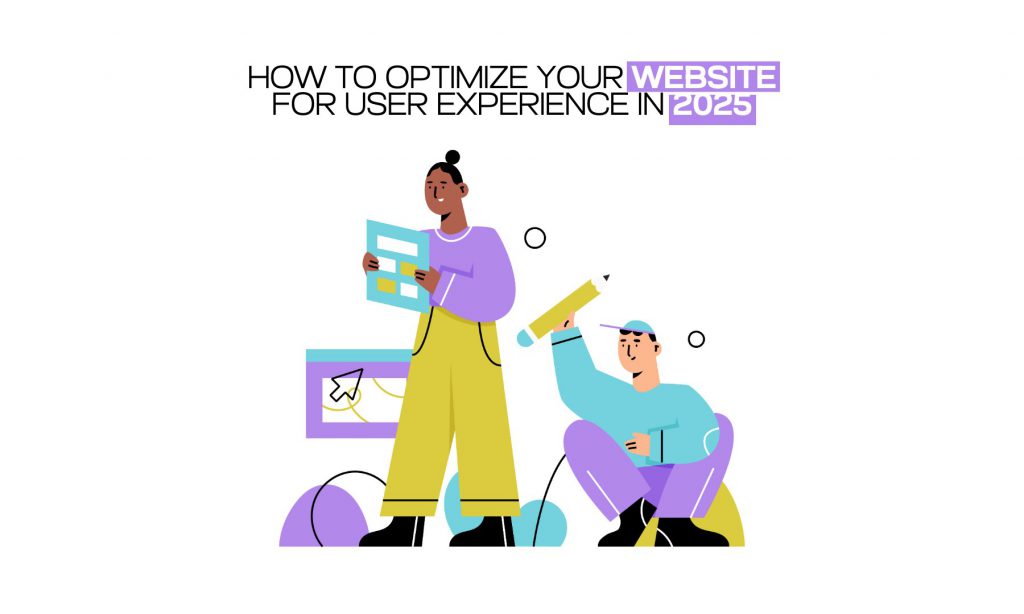
Learn how to optimize your website for UX in 2025 with responsive design, fast load speeds, technical SEO, and intuitive interfaces.
Within the realm of digital technology, user experience (UX) is the undisputed king. A website that is perfect and easy to use not only attracts visitors but also improves brand loyalty and creates conversions of potential customers. Since we are currently dealing with the advancements in 2025, optimizing your website for user experience (UX) will no longer be an optional practice. Let’s investigate the methods that will enhance the user experience of your website in order to set it apart from the competition in an area that is already rather competitive.
Prioritize Responsive and Mobile-First Design
Given that mobile devices are responsible for more than half of all online traffic worldwide, it is imperative that your website be completely optimized for mobile use. Through the ability to effortlessly adapt to a wide range of screen sizes, a responsive design offers the best possible viewing experience across each and every device. To ensure that your website is created with mobile users in mind from the very beginning, you should utilize a mobile-first strategy. This will result in an increase in both the website’s usability and accessibility.
Enhance Website Speed and Performance
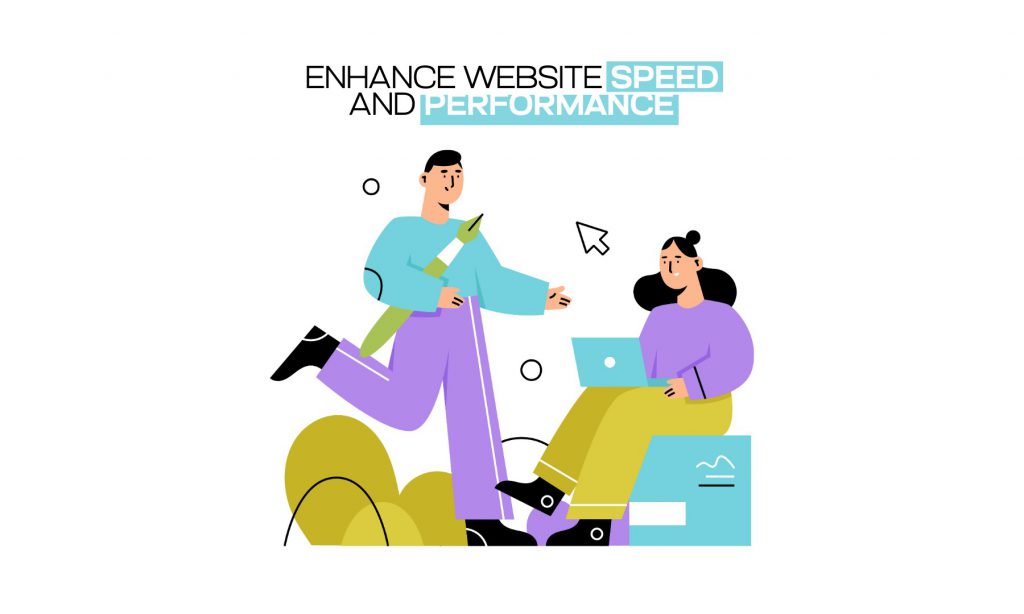
According to recent statistics, more than 85 % of websites make use of compression technologies such as Gzip in order to reduce the size of their files and improve load times. Additionally, the utilization of Content Distribution Networks (CDNs) will assist you in distributing your content across multiple servers located all over the world, thereby ensuring that users receive it more quickly, regardless of where they are located. Because of this, consumer satisfaction and search engine rankings are significantly impacted.
Implement Intuitive Navigation and Clear CTAs
Bounce rates are reduced and engagement levels are increased when a straightforward navigation structure makes it feasible to look for information with ease. Call-to-action (CTA) buttons that are strategically positioned guide users to the behaviors that are intended for them, such as registering for a newsletter or completing a transaction. When your calls to action (CTAs) and navigation are displayed in a consistent manner and are easily accessible on each page, the overall user experience is enhanced.
Leverage Technical SEO Services
The foundation of a properly tuned website is technical SEO. It involves optimizing the infrastructure of your website to guarantee efficient search engine crawling and indexing of your content. Leading Technical SEO service providers with an eye toward things like site speed optimization, mobile friendliness, safe connections (HTTPS), and structured data application. By fixing these technological aspects, you not only increase the exposure of your website but also provide a safe and quick browsing environment, therefore improving the user experience.
Invest in Professional User Interface Design Services
Having a user interface (UI) that is well designed is the primary factor that creates first impressions. Expert user interface design services focus on the creation of interfaces that are both aesthetically beautiful and user-friendly, while also being consistent with the identity of your company. The use of a data-driven approach ensures that design features, in addition to improving their aesthetic appeal, also increase usability and accessibility.
Optimize for Local SEO Services
Local SEO is absolutely crucial for companies aiming at particular geographic areas. Claiming and optimizing your Google My Business profile, controlling local citations, and motivating customer feedback are just a few of the ways you may maximize your website for local search. These initiatives raise your profile in local search results, therefore increasing foot traffic and local internet transactions.
Balance SEO On-Page and Off-Page Services
A complete SEO plan includes aspects on-page as well as off-page. By means of keyword-rich content, meta tags, and internal linking, on-page SEO seeks to maximize individual web pages. Conversely, off-page SEO is using social media interaction and backlink building to increase the authority and dependability of your website. Negotiating both factors guarantees a strong online presence and better search engine results.
Continuously Monitor and Improve User Experience
Continuous efforts are made to improve the user experience. Individuals are able to gain an awareness of areas that require improvement by routinely analyzing user behavior through the utilization of technology such as heatmaps and session recordings. Using A/B testing for several design elements and content variants enables you to make decisions based on evidence, which in turn improves user involvement and happiness.
Conclusion
Responsive design, technical SEO, simple navigation, and ongoing development taken together can help your website to be 2025 user-friendly. Working with a reliable Website Design & Development Company and using specialist services including Technical SEO, User Interface Design, and Local SEO will help you produce a website that not only meets but surpasses user expectations. Recall that a better user experience not only makes guests happy but also stimulates long-term client loyalty and conversions.
FAQ
User experience, also known as UX, is not only a matter of personal preference when it comes to design; rather, it is the unseen force that influences people’s perceptions of your brand the moment they visit your website. Creating a website that is not only simple to navigate but also visually consistent and lightning quick helps to build trust, maintain visitors’ interest, and gradually guide them toward taking action. Good user experience becomes your quiet salesperson, working around the clock, in a world where there are an infinite number of options and people’s attention spans are short.
Your users should be your starting point; observe, listen, and iterate. It would be beneficial to simplify navigation so that people are not required to “figure things out.” Invest in designs that are simple to navigate, websites that load quickly, and layouts that are straightforward. For the purpose of reevaluating your visual hierarchy, you should either collaborate with a credible website design and development company or search for professional user interface design services. Implementing Technical SEO Services is the next step in ensuring that your website functions flawlessly beneath the surface. The process of optimization is not a project; rather, it is a process. Maintain your curiosity, test frequently, and adapt with your audience.
Great UX is a combination of subtle psychology and strong design. Key elements include:
Clear navigation that gets users where they need to go without friction
Fast load times, because even a 1-second delay can impact bounce rates
Mobile responsiveness—a must in today’s swipe-first world
Visual consistency that creates comfort and credibility
Accessibility for all users, regardless of ability
All of this should be tied together with strong backend performance, often supported by Technical SEO and SEO on-page and off-page Services.
There’s a toolkit for every stage of UX optimization.
Use Google Analytics to track bounce rates, session duration, and user flows.
Try Hotjar or Crazy Egg for heatmaps and real-time visitor behavior insights.
Run A/B tests with tools like Optimizely or VWO.
Dive into Lighthouse and PageSpeed Insights for technical UX feedback.
For user testing, platforms like UserTesting.com let you observe how real users interact with your website.
And don’t forget—partnering with an experienced SEO Company or Website Design & Development Company can help you interpret this data and apply it effectively.
Massively. Mobile responsiveness isn’t just a feature—it’s a foundation. More than 60% of users access websites via mobile, and if your layout breaks or feels clunky, they bounce—fast. A mobile-responsive site adjusts intuitively to various screen sizes, ensuring a smooth, frustration-free experience. It also boosts rankings, thanks to Google’s mobile-first indexing. If you’re not mobile-first yet, you’re already falling behind. Engaging Local SEO Services and User Interface Design Services can help you stay ahead of the curve.